


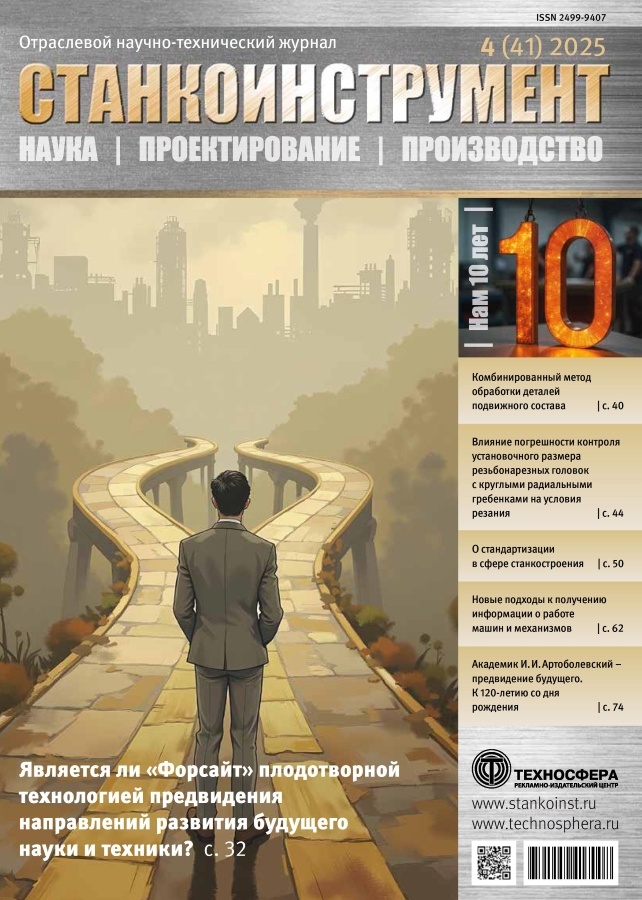
Станкоинструмент
Научно-технический рецензируемый журнал.
Главный редактор
- Новиков Сергей Васильевич, кандидат технических наук
Издатель
- АО "Рекламно-издательский центр «ТЕХНОСФЕРА»"
Учредители
- Акционерное общество "Рекламно-издательский центр «ТЕХНОСФЕРА»
- Ассоциация производителей станкоинструментальной продукции "Станкоинструмент"
Индексация
- РИНЦ
- CrossRef
- Google Scholar
- Ulrich's Periodicals Directory
- WorldCat
Периодичность выхода
- 4 выпуска в год
Язык публикаций
- русский
О журнале
Издается с 2015 года.
Журнал «Станкоинструмент» – отраслевой научно-технический журнал, комплексно рассматривающий проблемы станкоинструментальной промышленности на всем протяжении жизненного цикла ее продукции: от научных разработок до промышленного производства и эксплуатации.
В публикациях журнала комплексно рассматриваются следующие темы:
- Государственная политика в области станкоинструментальной промышленности России и Таможенного союза;
- Проблемы импортозамещения;
- Научные, прикладные и законодательные вопросы станкостроения и производства инструмента;
- Вопросы стандартизации, измерений и метрологического обеспечения;
- Экономика станкостроения;
- Рынок станков и инструмента;
- Подготовка кадров;
- История.
Основные рубрики
- Материалообрабатывающие станки;
- Технологии обработки материалов;
- Инструмент и инструментальные системы;
- Комплектующие изделия;
- Информационные технологии;
- Робототехника и мехатроника;
- Измерительная техника;
- Образование.
Журнал зарегистрирован как средство массовой информации в Роскомнадзоре. Свидетельство о регистрации СМИ ПИ № ФС 77 - 70979 от 07.09.2017
Текущий выпуск
 Открытый доступ
 Доступ предоставлен
 Доступ платный или только для подписчиков
№ 4 (2025)

Нам 10 лет
 12-13
12-13


«Индустрия 4.0»: некоторые проблемные вопросы
Аннотация
Рассмотрены системные проблемы реализации концепции «Индустрия 4.0», управления информационно-телекоммуникационными сетями, объединяющими производственные объекты. Высказано предположение о том, что техническая реализация концепции «Индустрия 4.0» наиболее эффективна в случае применения нейронных сетей.
14-18
Кейс-история
Специнструмент
20-21
СтанкоАртель
22-23
Р-Сталь
24-25
АКТУАЛЬНОЕ ИНТЕРВЬЮ
32-38
ТЕХНОЛОГИИ ОБРАБОТКИ МАТЕРИАЛОВ
Комбинированный метод обработки деталей подвижного состава
Аннотация
Предложен комбинированный метод обработки деталей подвижного состава, заключающийся в сочетании процесса восстановления изношенных поверхностей и последующего упрочнения борированием из обмазок с нагревом ТВЧ. Борирование обеспечивает необходимую твердость и износостойкость и устраняет структурные дефекты наплавленного металла и подложки. Одновременно создаются условия ремонтопригодности при неоднократном восстановлении и упрочнении.
40-42
ИНСТРУМЕНТ И ИНСТРУМЕНТАЛЬНЫЕ СИСТЕМЫ
Влияние погрешности контроля установочного размера резьбонарезных головок с круглыми радиальными гребенками на условия резания
Аннотация
Проведены теоретические исследования влияния рекомендуемых установочных размеров резьбонарезных головок, оснащенных круглыми радиальными гребенками, и погрешности их контроля на закономерность изменения заднего угла и опорных поверхностей резьбовой пары с учетом особенностей кинематики резания и расположения формообразующих элементов на режущей части инструмента. Получены значения установочных размеров резьбонарезной головки, обеспечивающие требуемые задние углы на элементарных режущих профилях рабочей части инструмента. Определены параметры нарезаемой резьбы, при которых ограничена возможность использования специальных средств контроля величины превышения, применяемых в промышленности. Показано, что для обеспечения возможности выполнения режущей и калибрующей частями инструмента своих функций выбор или проектирование средств контроля величины превышения должны проводиться с учетом полученной в аналитическом виде взаимосвязи конструктивных и геометрических параметров резьбовой пары «гребенка – деталь».
44-49
СТАНДАРТИЗАЦИЯ И СЕРТИФИКАЦИЯ
50-56
ИЗМЕРИТЕЛЬНАЯ ТЕХНИКА
58-60
62-73
О ПРОШЛОМ В НАСТОЯЩЕМ
Академик И. И. Артоболевский – предвидение будущего. К 120-летию со дня рождения
74-77